
Michael Phelps will add another Olympic accomplishment to his résumé in Rio this year. But it will not come in the pool. Phelps is the flag bearer for the United States at the Opening Ceremony.
Phelps joins a list of American icons who have carried the flag since 1908. Although the list has included household names such as Rafer Johnson, Dawn Staley and Evelyn Ashford, Phelps will be the most distinguished Olympian to carry the stars and stripes into the Olympic Stadium.
Michael Phelps (2016)
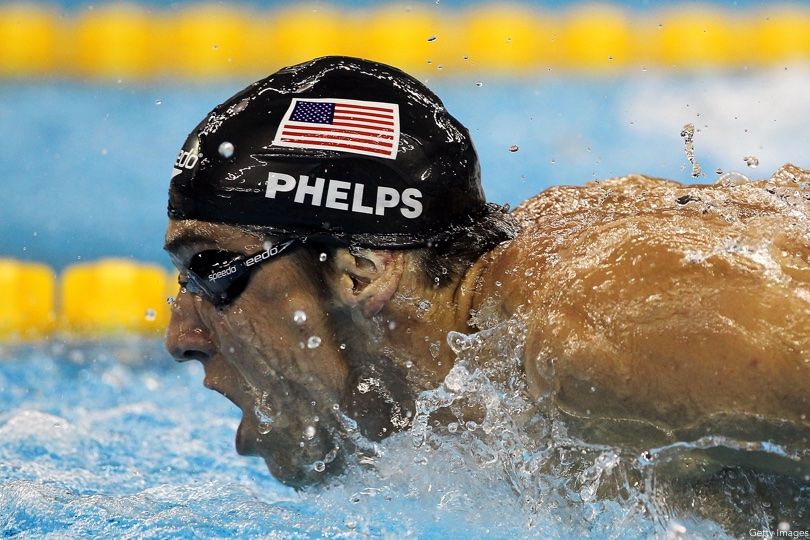
Phelps enters his fifth Olympics with 22 medals -- 18 of them gold (both records). His eight gold medals at the 2008 Olympics are the most in a single Games. Phelps is the first American male swimmer to ever qualify for five Olympics. Earlier this week, Phelps called the Rio Games, "my potential last Olympics," leaving the door open a crack for Tokyo in 2020. No matter when Phelps retires for good, he is playing with house money in Rio.
Mariel Zagunis (2012)
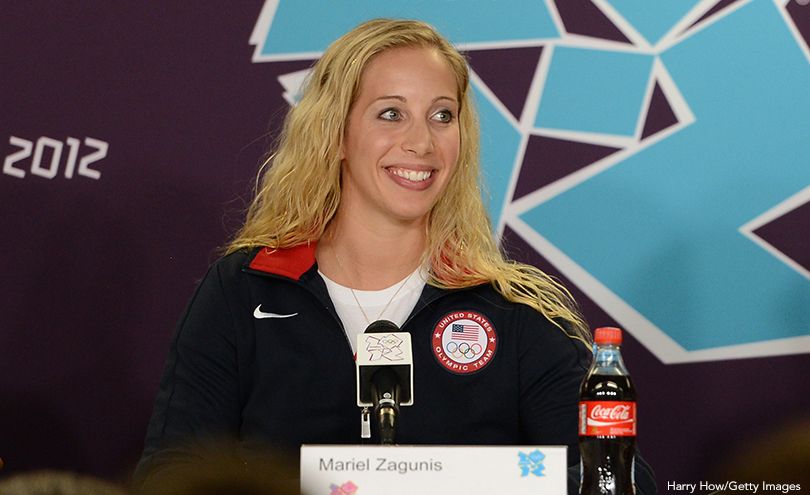
Zagunis, who fenced collegiately at Notre Dame, was the first American fencer to win gold in more than a century when she won in individual sabre in 2004. She repeated the feat in 2008 as well as at the World Championships in 2009 and 2010.
Lopez Lomong (2008)
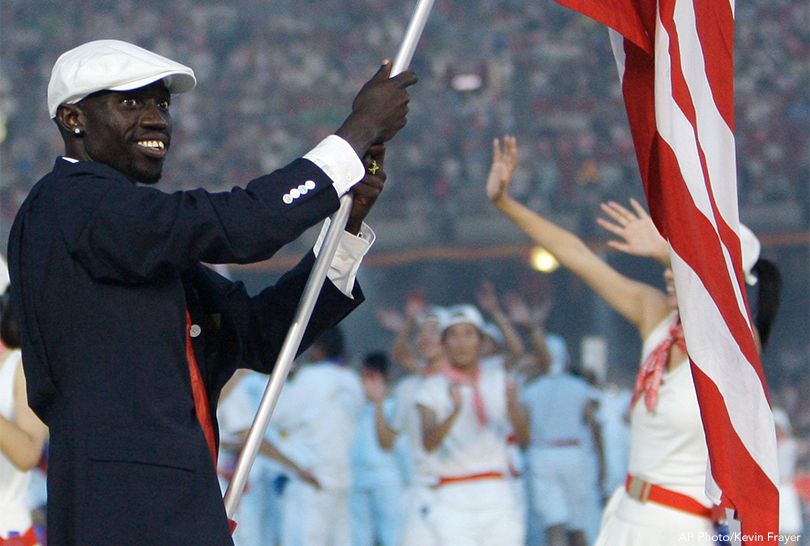
Lomong was a Lost Boy of Sudan displaced in the United States in 2001 after ten years in a Sudanese refugee camp. He was put in a New York State household and introduced to track at Tully High School in Tully, New York. Lomong ran track at Northern Arizona University and gained citizenship on July 6, 2007. Exactly one year later, he qualified for the Olympics. "Now I'm not just one of the 'Lost Boys.' I'm an American," he said. Lomong was a member of Team Darfur, an international association of athletes working to raise awareness of the violence in Darfur.
Dawn Staley (2004)
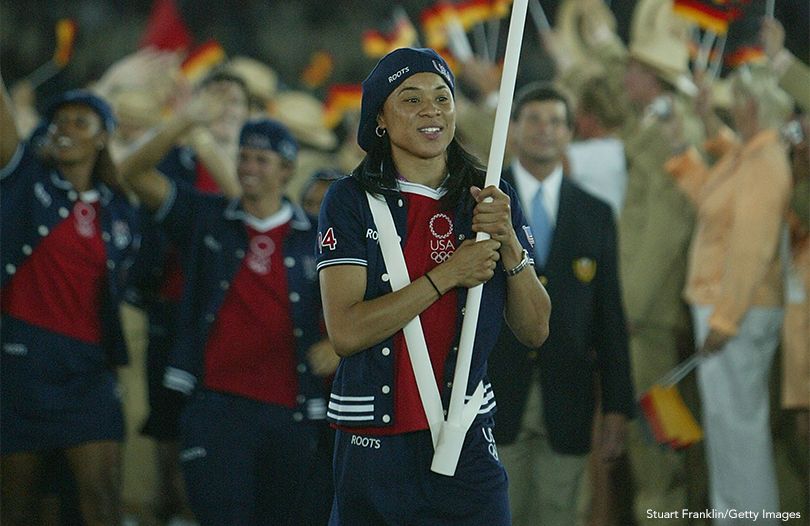
A three-time Olympian, Staley won three gold medals in basketball from 1996-2004. She gave her 1996 gold medal to her mother, Estelle, as a gift for being the biggest influence in Staley's life. Staley was named the 2004 USA Basketball Female Athlete of the Year and she was an assistant coach for the U.S. at the 2008 Olympics.
Cliff Meidl (2000)
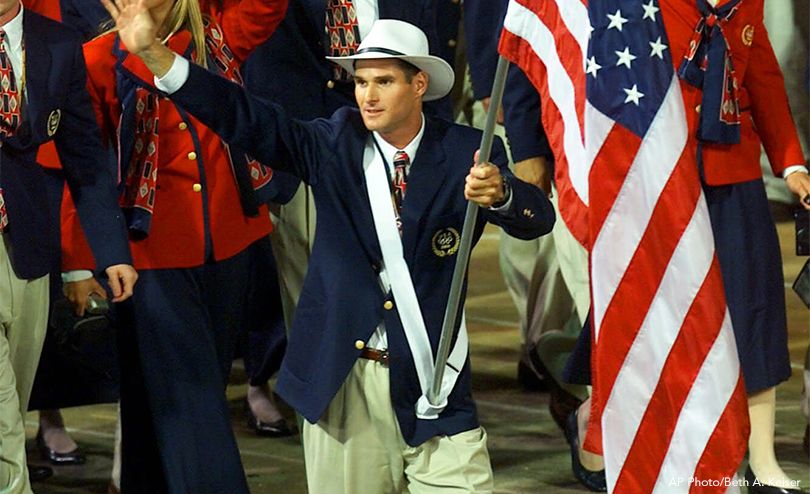
Meidl, at age 20, suffered near-fatal electrical burns and other injuries in a construction accident that sent 30,000 volts through his body. Despite the odds, Meidl overcame his injuries and competed in kayaking at the 1996 and 2000 Olympics at age 30 and 34. After carrying the flag in Sydney, Meidl has worked in asset management and been a motivational speaker.
Bruce Baumgartner (1996)
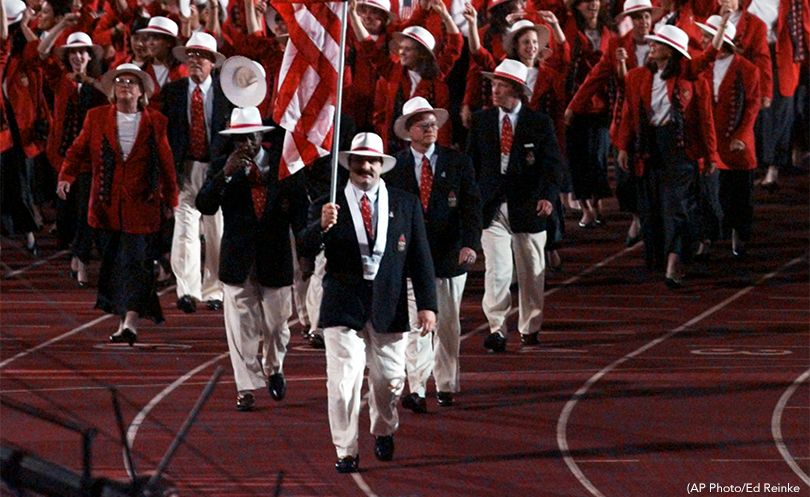
The New Jersey-born wrestler won four medals, two gold, one silver and one bronze in freestyle (130 kg) from 1984-1996. He served as the host flag bearer in the 1996 Atlanta Olympics. Baumgartner is the current Director of Athletics at Edinboro University of Pennsylvania.
Francie Larrieu Smith (1992)
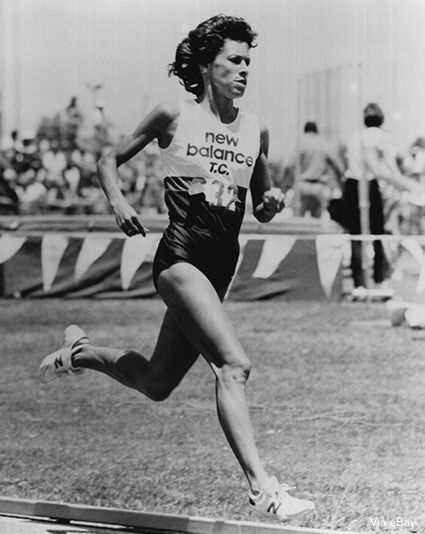
Larrieu Smith never medaled at the Olympics, but she was one of the most durable long-distance runners of all-time, representing the United States at every Olympics from 1972-1992, with the exception of the boycotted 1980 Games. She peaked with a fifth place finish in the 10,000 meters in 1988. Larrieu Smith has been the cross-country coach at Southwestern University in Georgetown, Texas, since 1999.
Evelyn Ashford (1988)
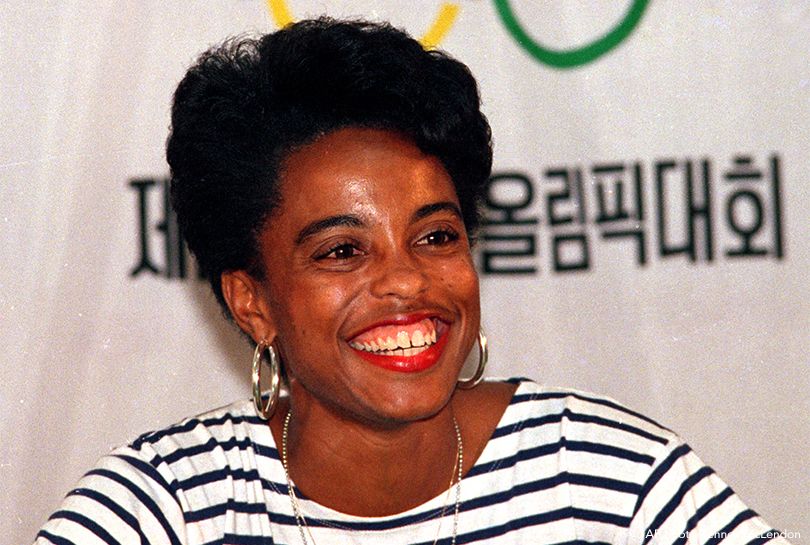
In 1984, Ashford became the first woman to ever run the 100 meters in under 11 seconds at the Olympics, clocking in at 10.97 seconds. Ashford added three 4x100 relay gold medals in the 1984, 1988 and 1992 Games. She also won a silver medal in the 100 meters in 1988. As successful as Ashford was, her prime may have been in 1980 when the United States boycotted the Moscow Olympics. She had previously finished in fifth place in the 100 at the 1976 Games.
Ed Burke (1984)
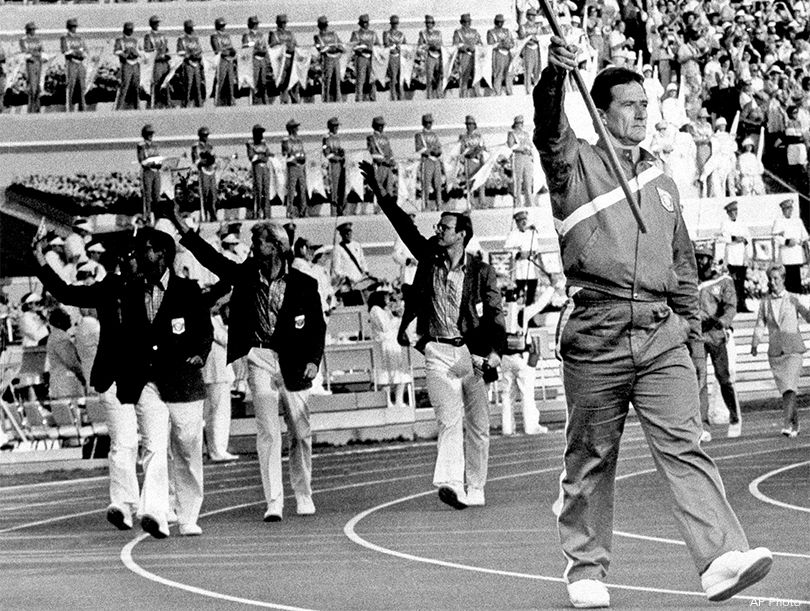
Burke finished seventh in the hammer throw at the 1964 Olympics and was a favorite in 1968. But Burke walked away from the sport after 1968 because he felt unfairly judged for a disappointing performance. In 1979, 15 years later, while watching the World Cup with his daughters, Burke claims one of them asked, "You did that?" Burke, almost 40 at the time, decided to give hammer throwing a try again. He made the U.S. team in 1984 for his third Olympic appearance, and his comeback story earned him the flag in Los Angeles.
Gary Hall (1976)
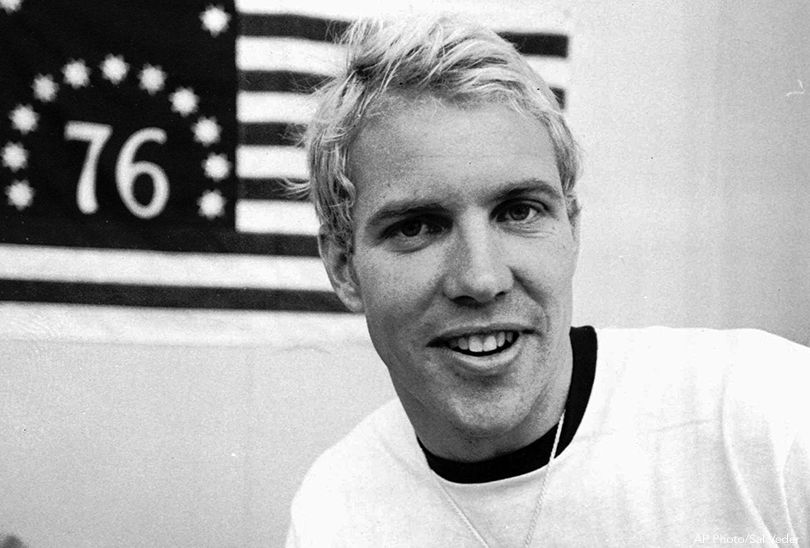
Hall carried the flag at the 1976 Montreal Olympics. The swimmer entered the Games with two silver medals (400 meter medley in 1968 and 200 meter butterfly in 1972) and added a bronze medal in Montreal in the 100 butterfly. After his swimming career ended, Hall became an ophthalmologist. His son, Gary Hall, Jr., competed in the 1996, 2000 and 2004 Olympics in the pool, winning ten medals, including five gold.
Olga Fikotova (1972)
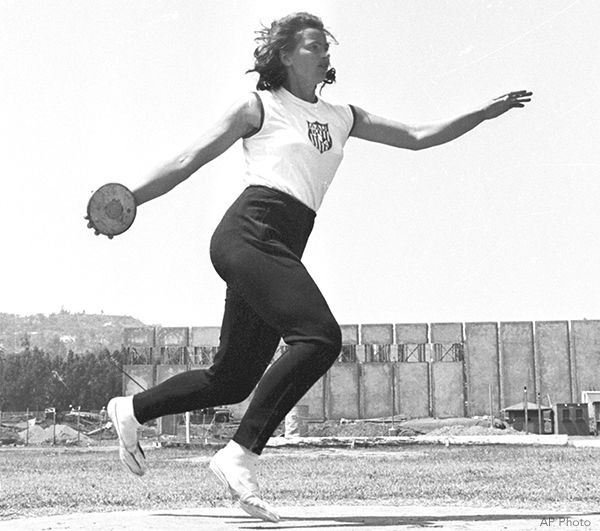
Fikotova's claim to fame came at the 1956 Melbourne Games as a representative of Czechoslovakia. She won gold in the discus throw and simultaneously fell in love with Harold Connolly, the American hammer gold medalist that year. When the couple's relationship went public, the West embraced it, while the communist side of the Iron Curtain scoffed. Fikotova married Connolly and moved to the United States. "We believe in love," U.S. Secretary of State John Foster Dulles said after Connolly's proposal. Fikotova's wish to continue representing Czechoslovakia was disallowed by the Czechoslovak Olympic Committee, and Fikotova began representing the United States in 1960. Fikotova carried the flag in Munich in 1972 at her fifth Olympics. Outside of the Olympics, Fikotova, who had been training to be a doctor in Czechoslovakia, worked cleaning the offices of The Boston Globe, while Connolly sold insurance. The couple divorced in 1973.
Janice Romary (1968)
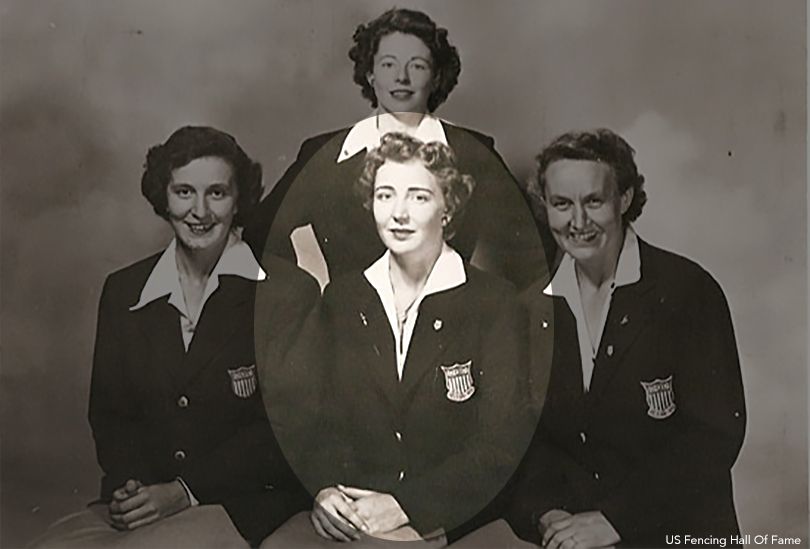
The fencer became the first female flag bearer for the United States at the 1968 Mexico City Olympics. The Games were Romary's sixth Olympics. Although she never won a medal, Romary finished fourth in women's individual foil in 1952 and 1956. After her Olympic career as a competitor, Romary was the women's administrator for the United States Olympic Committee for the 1976 Montreal Olympics and the commissioner of fencing at the 1984 Los Angeles Olympics.
Parry O'Brien (1964)
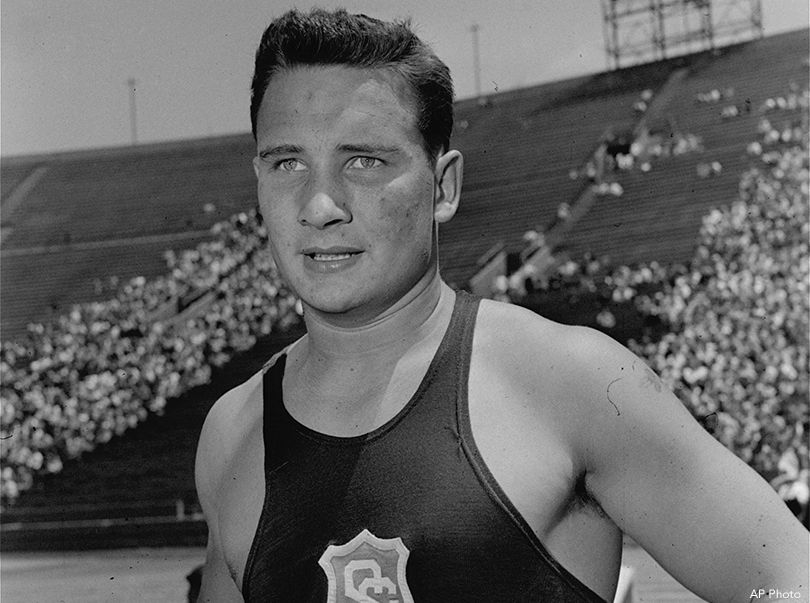
O'Brien arrived at the 1964 Tokyo Games as a three-time shot put medalist after winning gold medals in Helsinki in 1952 and Melbourne in 1956. He won a silver medal in Rome in 1960. At the Tokyo Olympics, O'Brien finished fourth. The Santa Monica, California, native practiced shot put deep into his life, throwing a 6-kilogram shot put 17.72 meters in his early 50s.
Rafer Johnson (1960)
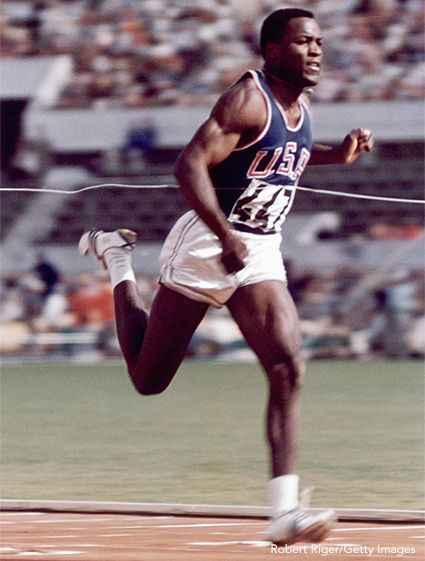
A decathlete from Hillsboro, Texas, Johnson became the first African-American flag bearer for the U.S. at the 1960 Rome Olympics. He won two Olympic medals, one silver in Melbourne in 1956 and a gold in 1960, both in the decathlon. Johnson was the 1958 Sports Illustrated Sportsman of the Year. Outside of track and field, Johnson was a 28th round draft pick of the Los Angeles Rams, a film/TV actor (his most famous appearance was as a DEA Agent in the James Bond film License to Kill) and a member of the Peace Corps. He also worked on Robert F. Kennedy's presidential campaign and was part of the group that grabbed Sirhan Sirhan after assassinating Kennedy. Reporter Andrew West of KRKD in Los Angeles famously shouted "Get the gun, Rafer, get the gun!" His brother Jimmy is a Pro Football Hall of Fame cornerback and his daughter Jenny represented the U.S. in beach volleyball at the 2000 Sydney Games.
Norman Armitage (1952, 1956)
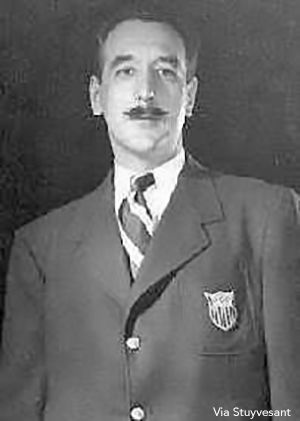
Armitage, a fencer, won his lone Olympic medal, a bronze, in the sabre team event at the 1948 London games. He competed in six Olympics from 1928-1956 and would have been part of more Olympics if it were not for the suspension of the 1940 and 1944 Games due to World War II. During Armitage's fencing career, he doubled as a chemical engineer and a patent attorney. The Albany, New York, native was also Jewish and known for his waxed mustache.
Ralph Craig (1948)
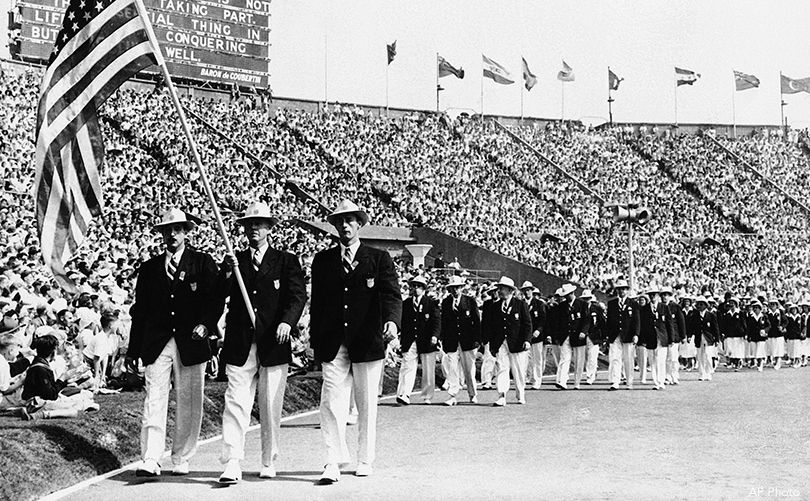
Craig became a hero at the 1912 Stockholm Games when he won two gold medals in the 100 and 200 meters. He retired from track and field after the Olympics. Craig returned to the Olympics in 1948 as a U.S. yachting team alternate. The 59-year-old did not compete in the Games, but he carried the flag at the Opening Ceremonies in London.
Al Jochim (1936)
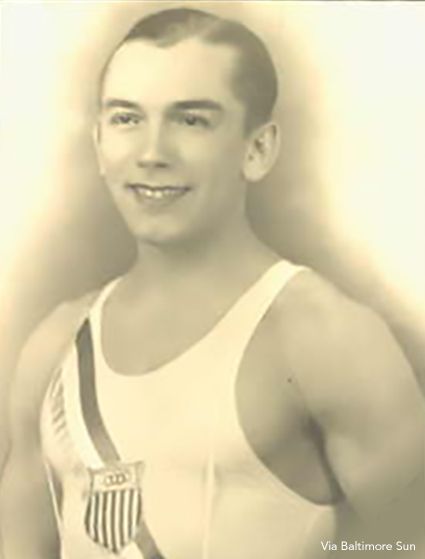
Jochim, a gymnast born in Berlin, became the second foreign-born Olympian to carry the American flag at the 1936 Berlin Olympics. Jochim was coming off a two-silver medal performance at the 1932 Los Angeles Games in the vault and team all-around, but he failed to medal in his birth city.
Morgan Taylor (1932)
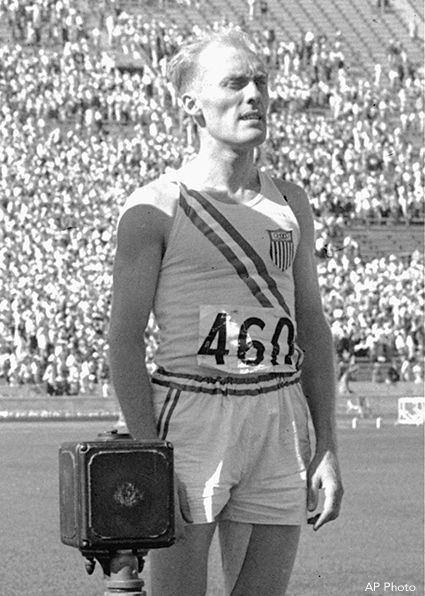
Taylor, a hurdler from Sioux City, Iowa, carried the American flag into the Los Angeles Memorial Coliseum at the 1932 Olympics. He won three medals in three different Olympics, all in the 400 meter hurdles: a gold at the 1924 Paris Games and bronzes at the 1928 Amsterdam Games and 1932 Los Angeles Games. Along with track and field, Taylor also played football at Grinnell College in Grinnell, Iowa.
Bud Houser (1928)
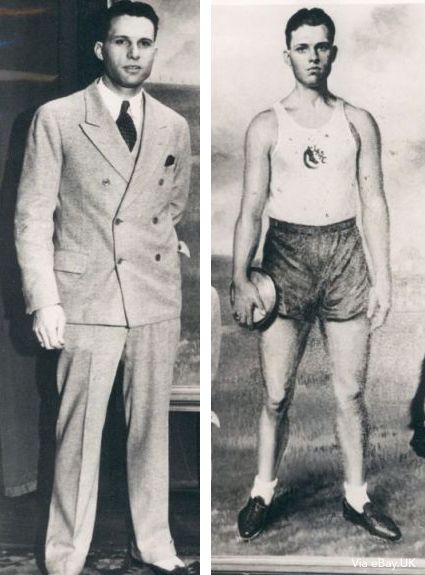
A track and field athlete from Missouri, Houser won three Olympic medals -– all gold. He claimed two gold medals at the 1924 Paris Games, one in the shot put and one in the discus throw. As the flag bearer at the 1928 Amsterdam Games, Houser successfully defended his discus throw crown for another gold. After his Olympic success, Houser became a dentist.
Pat McDonald (1920, 1924)
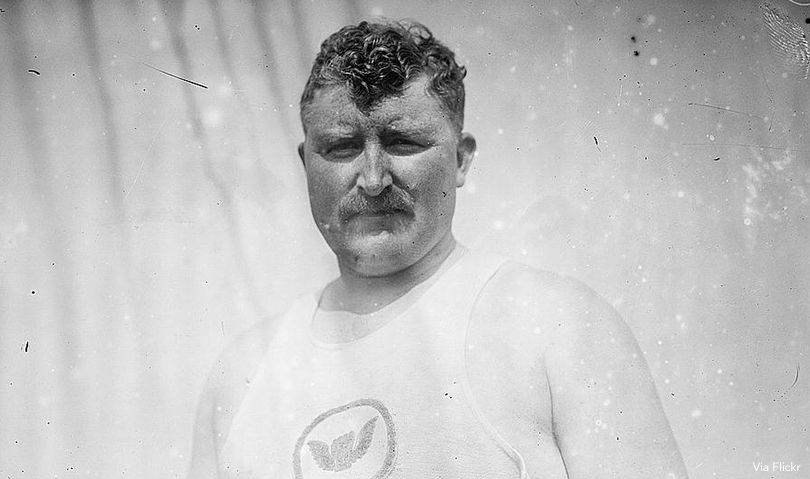
In the first Olympics after World War I, McDonald, born in County Clare, Ireland, became the first foreign-born American flag bearer. Like George Bonhag (see below), McDonald was a member of the Irish American Athletic Club and the New York City Police Department. For many years, his police work consisted of being a traffic cop in Times Square. McDonald, the third consecutive track and field flag bearer, kept up the trend of also winning a gold medal. He won gold in the 56-pound weight throw. McDonald ended the streak when he failed to medal at the 1924 Paris Games. McDonald also won a gold in the shot put and a silver in the two-handed shot put at the 1912 Stockholm Games along with his 1920 gold.
George Bonhag (1912)
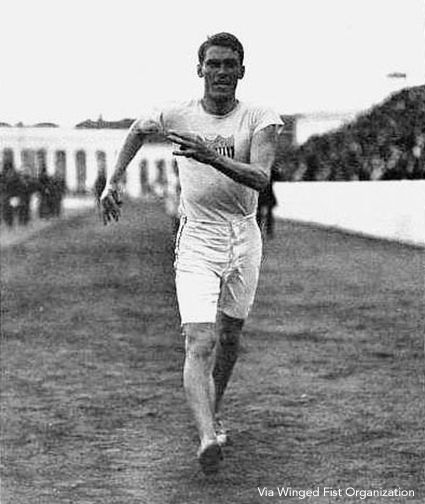
A member of the Irish American Athletic Club and the New York City Police Department, Rose won his first Olympic medal at the 1908 London Games, a silver in the 3-mile team race. In the 1912 Stockholm Games, Bonhag won his only gold medal in the 3000 meter team race. He also competed in individual races, steeplechase events and cross-country competitions but failed to medal in those events. Bonhag played first base in an exhibition baseball tournament played at the 1912 Olympics (baseball had not become an Olympic sport yet). Jim Thorpe was one of his baseball teammates.
Ralph Rose (1908)
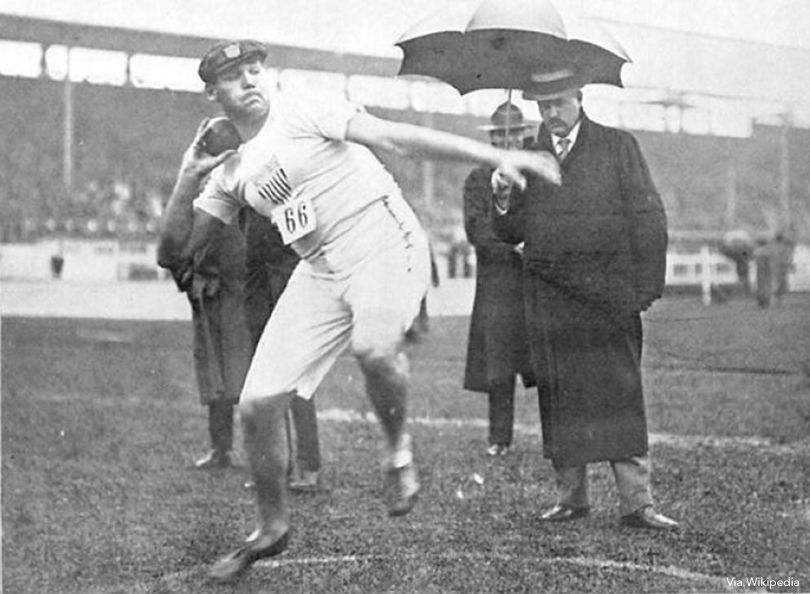
Rose won three gold medals -- two in the shot put (1904 in St. Louis and 1908 in London) and one in the two-handed shot put (1912 in Stockholm). He also won a discus throw silver in St. Louis, a shot put silver in Stockholm and a bronze in the hammer throw in St. Louis. In 1908 in London, Rose also took part in tug of war, but he failed to medal. The Healdsburg, California, native competed for the famed Olympic Club in San Francisco.
More Olympics:
-- How Christen Press Stays Sane Despite Crazy Schedule
-- Allyson Felix: Who Inspired Her, How She Takes Her Coffee And More Fun Facts
-- Kyrie Irving And Coach K Have 'Unfinished Business'
Follow Jeffrey Eisenband on Twitter @JeffEisenband.


